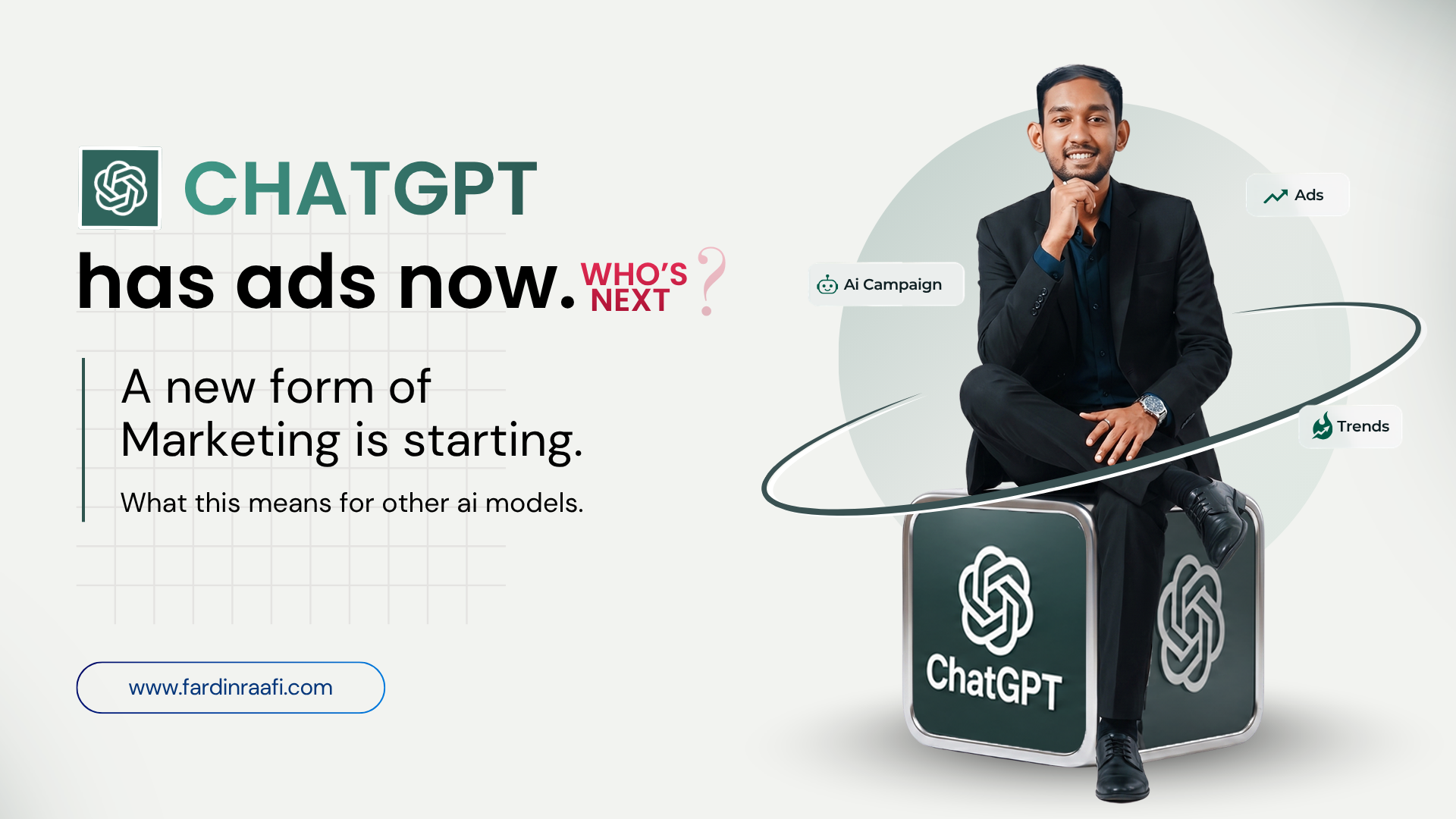
ChatGPT Ads Just Crossed $1 Billion: The End of Keywords and the Future of AI Marketing
The digital marketing landscape is experiencing a tectonic shift. ChatGPT Ads just crossed the $1 billion revenue mark in less than 200 days after launch. This number is staggering, but the revenue itself is not the most interesting part of the story.
The truly fascinating element is the fundamental change in how digital advertising will operate moving forward. Google gives us a list of search results. Instagram provides an endless visual feed. ChatGPT, however, gives us a fluid conversation.
Brands now have the unprecedented opportunity to advertise in an environment where users are actively exploring options, comparing specific products, asking for customized recommendations, and making high-stakes decisions. With the ChatGPT Ads Manager now available for self-serve advertising in regions like India, we are witnessing the opening chapter of a completely new playbook.
But before you reallocate your entire marketing budget, we need to look at the reality of the platform today and what this means for the broader artificial intelligence ecosystem.
🔹 The Early Stage Reality Check for Advertisers
The hype surrounding this launch is massive. However, looking under the hood of the early beta access reveals a platform that is still in its infancy.
Right now, the system lacks the robust optimization infrastructure that growth marketers rely on. We are currently limited to basic "Reach" campaigns. There is no conversion tracking pixel. There is no ability to retarget users who engaged with your brand previously. The reporting metrics are incredibly basic.
If you approach ChatGPT Ads expecting it to function like a mature Meta or Google Ads dashboard that will instantly drop your Customer Acquisition Cost, you will fail. It is a raw ecosystem.
My recommendation for growth teams and business development leaders is clear. Treat this as a strategic experiment. Allocate 5 to 10 percent of your budget to testing if you have access. Keep the vast majority of your capital deployed on proven, measurable channels until the OpenAI advertising infrastructure matures.
🔹 The Biggest Mindset Shift: From Keywords to Moments
Despite the current current technical limitations, the long-term potential is revolutionary because of one singular factor: search-like intent.
This is not the passive, interruption-based intent of social media scrolling. People are literally typing their highly specific business and personal problems into the chat interface in real time.
The biggest required mindset shift for marketers is to stop obsessing over exact-match keywords and start thinking about critical moments. You must ask yourself what specific conversations your brand needs to appear in.
Strategies for Conversational Targeting
Instead of bidding on generic terms, forward-thinking brands are already testing highly contextual strategies:
- Competitor Conversations: Positioning your brand strategically when a user asks the AI to compare your biggest rival to other market alternatives.
- Problem-Centric Prompts: Appearing exactly when a user describes a pain point that your specific software or service was built to solve.
- Persona-Based Buying Questions: Engaging when decision-makers ask highly technical questions about implementation, pricing, or resource scaling.
- High-Intent Educational Moments: Providing immediate, branded value when users ask the AI to explain a complex industry concept.
What This Means for the Broader AI Ecosystem
OpenAI proving that conversational advertising is not only viable but highly lucrative will send shockwaves through the entire artificial intelligence industry. The compute costs required to run Large Language Models are astronomical. Subscription tiers alone cannot sustain the massive scale these companies are targeting.
Here is what we can expect to happen across the landscape:
- The Rush to Monetize Free Tiers: Competitors like Claude and Gemini will face immense pressure to follow suit. While Perplexity has already stepped into the AI search advertising space, traditional conversational models will need to find ways to monetize their massive free user bases. Ad-supported free tiers will likely become the absolute industry standard within the next twelve months.
- The Evolution of Native AI Formats: Right now, we are thinking about ads in traditional terms. But AI models will soon pioneer entirely new formats. Imagine dynamic product feeds generated directly inside the chat window based on the user's specific problem. We will see interactive widgets, real-time CRM integrations, and direct booking systems embedded seamlessly into the AI's natural response.
- A Direct Threat to Traditional Search Hegemony: Google has held a monopoly on intent-based advertising for decades. But context-based AI advertising is far more natural and highly personalized. If users can get a perfectly tailored product recommendation complete with an embedded purchasing option through a simple conversation, the traditional process of scrolling through ten blue links will feel instantly outdated.
🔹 The Future Belongs to Context
The transition from keyword-based advertising to context-based advertising is officially underway. The brands that learn how to navigate conversational targeting early will build a massive, almost insurmountable advantage over the next few years.
They will capture high-intent users at a fraction of the cost of legacy channels. They will build trust by appearing as helpful solutions in moments of genuine need, rather than as intrusive banners on a webpage.
The technology is evolving rapidly, and consumer behavior is shifting right alongside it. The only question left for modern marketers and business leaders is this:
Ready to Upgrade Your Marketing Strategy?
If you want to discuss implementing AI tools, optimizing B2B growth operations, or collaborating on brand strategy, I would love to connect.
Contact Me for More Info ➔Marketing Executive | Driving Growth at Augmex Technologies